D1 Diavolezza → Chamanna da Boval
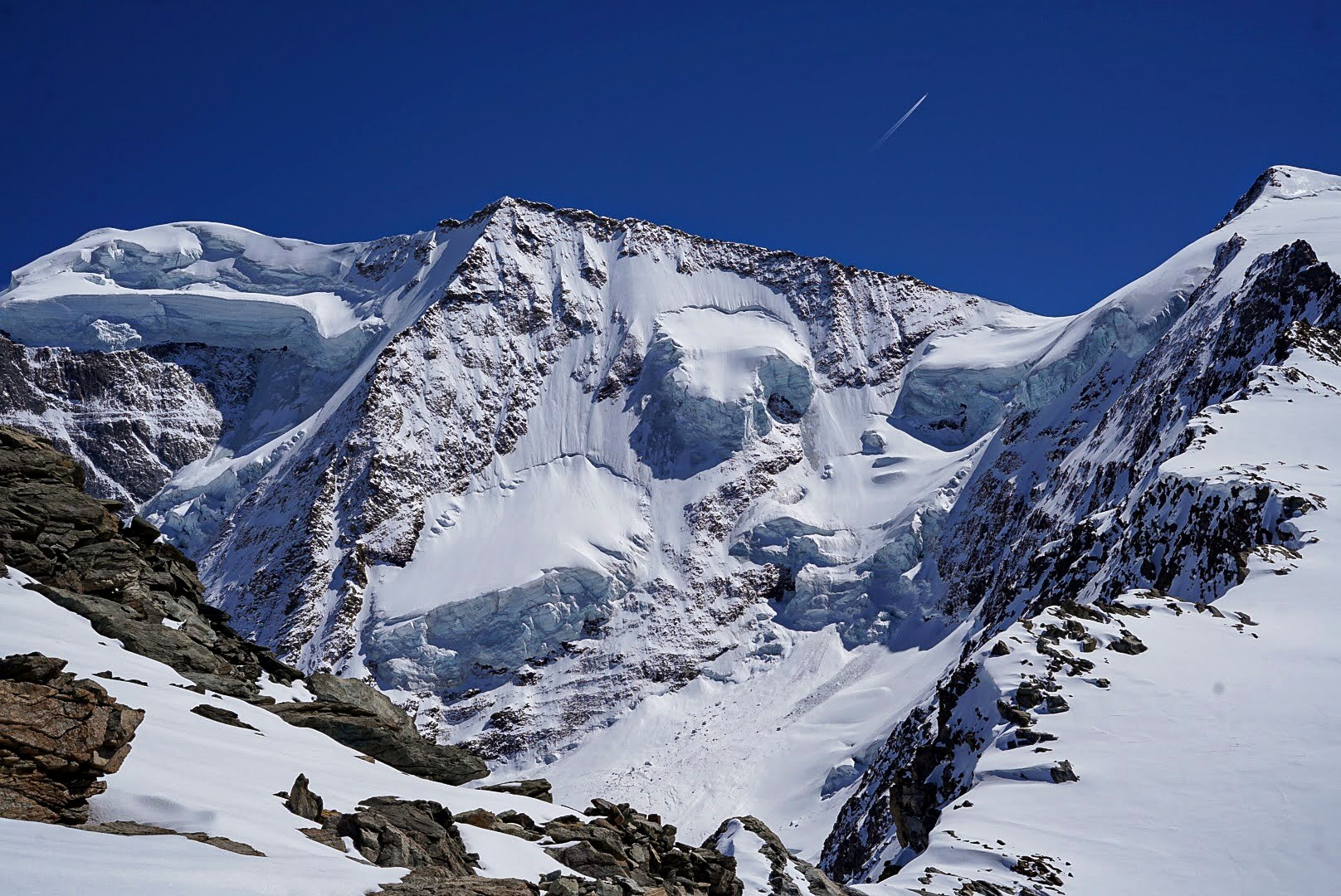
When we park in the large car park at the foot of the Diavolezza cable car, it is huge and almost empty. The atmosphere is spring-like, only a little fresh air reminds us that we have come to ski. There is also the ski slope, already descended by some die-hard skiers. Diavolezza, strange name. Why is the devil, present in a suggestive way in the station's communication, summoned to name a tourist place? What the hell is he doing here! Unanswered question, but undisguised pleasure at reaching the foot of the glaciers so quickly. Perhaps the image of the devil translates both the splendor and the dangerousness of these immense serac bars which strike the eye of anyone arriving at the top of the cable car, when the panorama opens up extending from Piz Palü to Bernina, and its innumerable suspended and chaotic glaciers. Few Alpine massifs reflect these images. And paradoxically, this impressive character is counterbalanced by the relatively modest size of the massif, which can be toured in three or four days.
We feel spring, and maybe even summer, when we set foot on the glacier. There is not a breath of air. On this glacier, there are millions of small creatures, elongated in shape and measuring only a few millimeters. This is the first time I have encountered this phenomenon, but not without being surprised by their number, and the abilities that these insects develop to be able to live here, in the snow.
We cross the glacier towards a tongue of snow, a sort of scarf between the rocky bars. While we endured the heat, I almost unconsciously chose a ventilated place for a picnic: the ridge coming from “Fortezza”, our objective for the day. It forms a comfortable shoulder to go up on skis, protected on either side by rocky bars, which soon also take over the ridge to form this famous “fortress”. From there, a new scarf takes us to the opposite glacier, and to the Boval cabin, built well above the moraine, immense here. Moreover, access to the hut seems to cross this moraine in its zone of weakness, which seems a little less steep and relatively stabilized. After some careful consideration about the possibility of putting the skins back on for a short climb, given the quality of the uneven snow, we opted without much hesitation for a beer on the terrace. My companions seem relatively worried at the prospect of lacking some in the coming days, when we will be in an unguarded cabin, and they seem to want to compensate in advance for this lack. I can't imagine putting my carbon Gignoux in all these protruding and unstable rocks, so I leave the shells and keep only the liners. And it's ultimately much more comfortable.
The bet turns out to be a winner: a terrace in the sun, and the solitude of a hut where we will be almost alone this evening. The guard, Roberto, seems boorish at first. Not very chatty, but he still makes the effort to speak a mix of French and English, to bring us three large draft beers. He has been guarding this hut for twenty-two years after four years at the Forno cabin, and I feel he is tired of being there. One or two years and it will be retirement for this ski instructor from Pontresina who never really seems to stop working. He is also waiting for two people from Eastern countries who have booked, but who do not seem to honor their commitment, an attitude which seems to make our host resigned, who describes them as "stupid people". A behaviour which has continued to gain importance in recent years, perhaps helped by the ease and dehumanization of exchanges allowing reservations to be made in shelters. So there are only three of us in the refectory, with fine service and a “Swiss-style” menu, the soup always being followed by green salad, and the dessert, based on meringue.